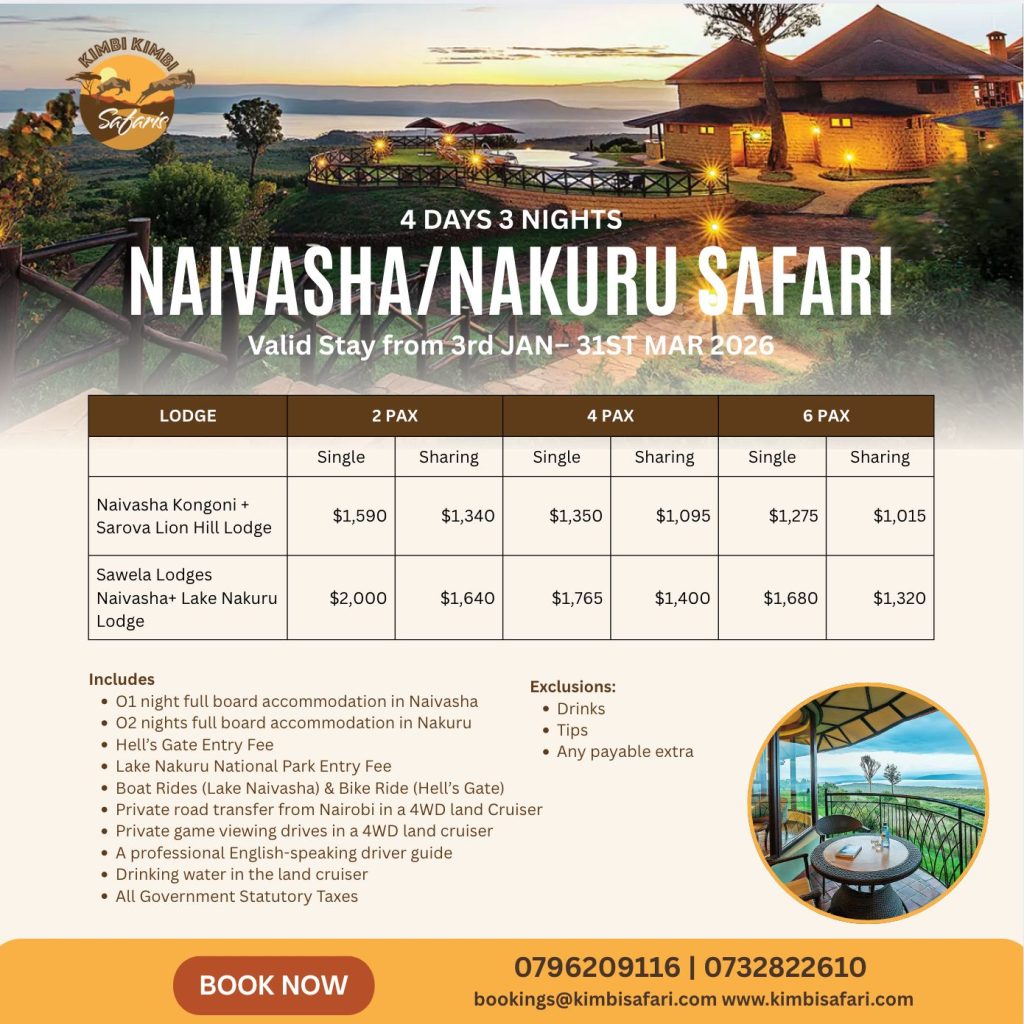
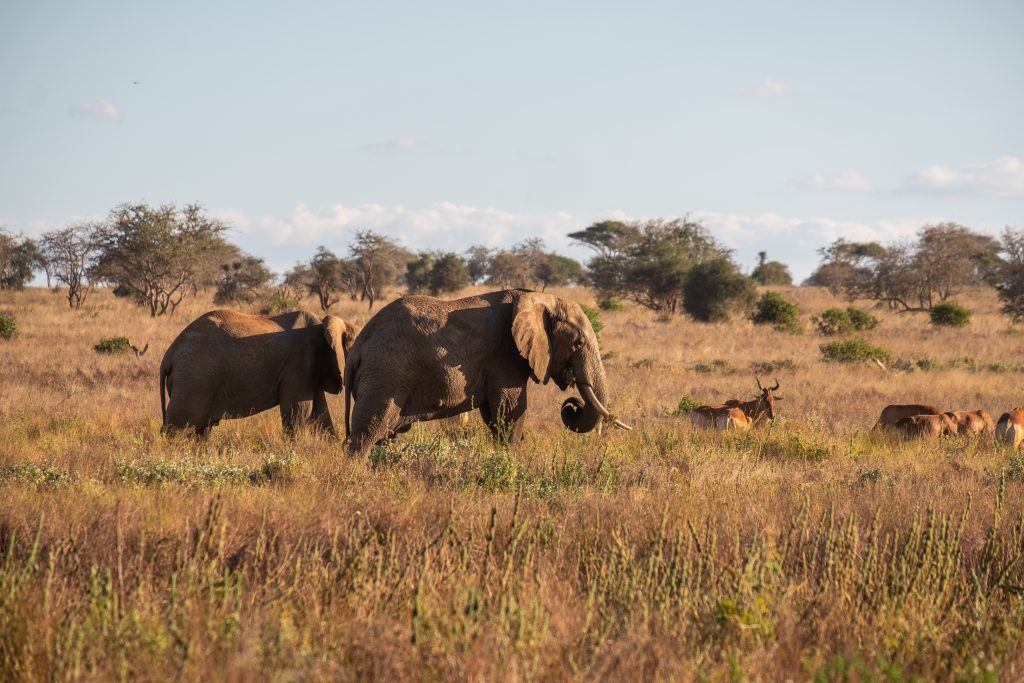
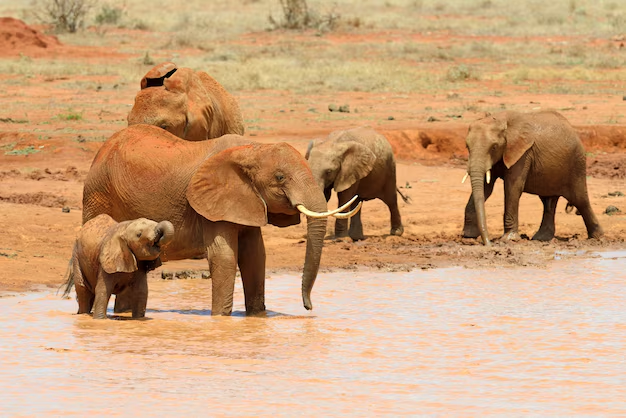
Experience the beauty of Kenya’s Great Rift Valley on a 4-day, 3-night safari to Lake Naivasha and Nakuru National Park. Explore the scenic landscapes, enjoy boat rides on Lake Naivasha, spot hippos and a variety of birdlife, and witness flamingos and wildlife including rhinos, giraffes, and lions in Nakuru National Park. This safari offers comfortable accommodations, exciting game drives, and an unforgettable introduction to Kenya’s rich wildlife and natural wonders.
Valid Stay from 3rd JAN– 31ST MAR 2026
Recommended Hotels
Lake Naivasha Kongoni + Sarova Lion Hill Lodge
Sawela Lodges Naivasha + Lake Nakuru Lodge
Package Cost
LODGE
2 PAX
4 PAX
6 PAX
Single
Sharing
Single
Sharing
Single
Sharing
Naivasha Kongoni + Sarova Lion Hill Lodge
$1590
$1340
$1350
$1095
$1275
$1015
Sawela Lodges Naivasha+ Lake Nakuru Lodge
$2000
$1640
$1765
$1400
$1680
$1320
The Package Includes:
O1 night full board accommodation in Naivasha
O2 nights full board accommodation in Nakuru
Hell’s Gate Entry Fee
Lake Nakuru National Park Entry Fee
Boat Rides (Lake Naivasha) & Bike Ride (Hell’s Gate)
Private road transfer from Nairobi in a 4WD land Cruiser
Private game viewing drives in a 4WD land cruiser
A professional English-speaking driver guide
Drinking water in the land cruiser
All Government Statutory Taxes
The Package Excludes:
Drinks
Tips
Any payable extra
N/B
The rates are subject to Change and Availability as no booking has been done!
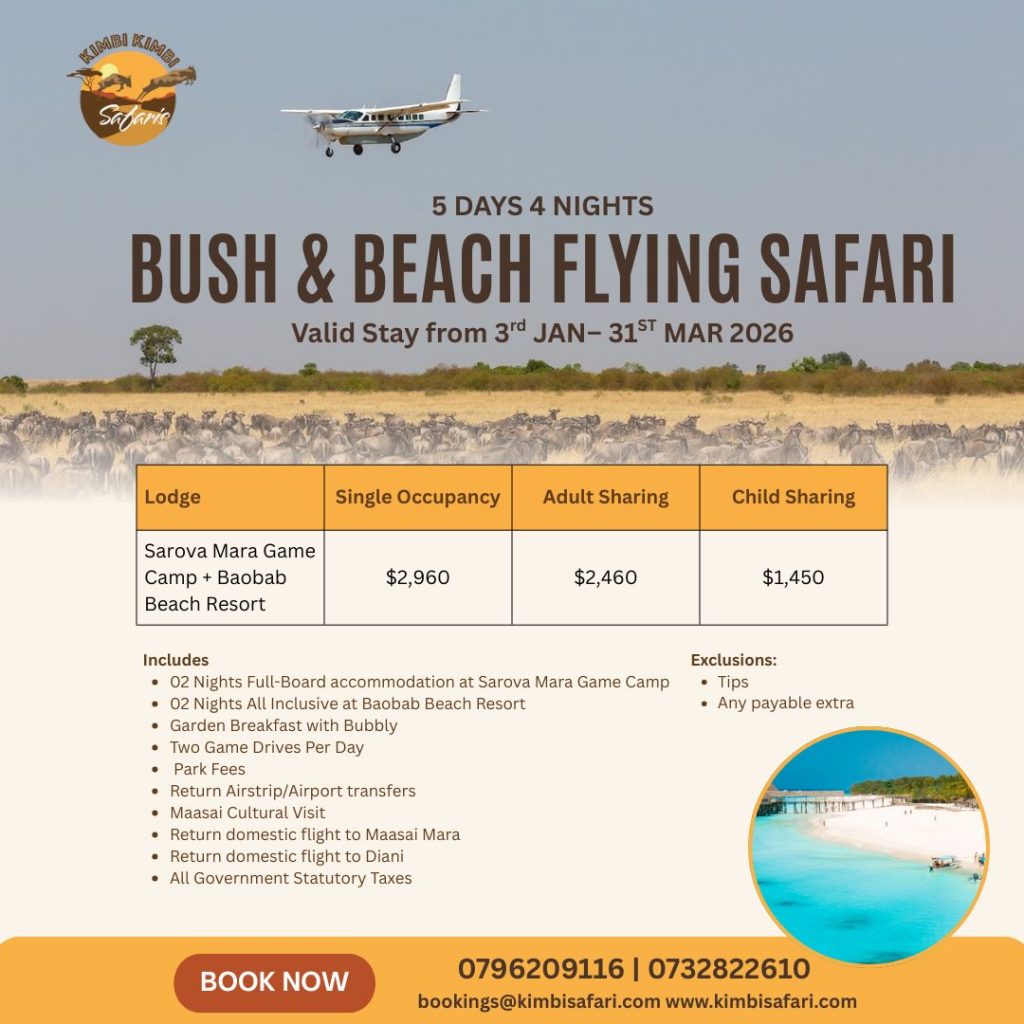
Arrive at the Maasai Mara airstrip and transfer to Sarova Mara Game Camp. Enjoy a garden breakfast with bubbly before settling in. Later, head out for your first game drive, returning to the camp for dinner and an overnight stay. Meal Plan: Full Board
Day 2: Maasai Mara
Enjoy an early morning game drive, followed by breakfast at the camp. Relax during the day or enjoy the lodge facilities. In the afternoon, depart for another game drive across the reserve. A Maasai cultural visit is included. Dinner and overnight at the camp. Meal Plan: Full Board
Day 3: Maasai Mara – Diani Beach
After breakfast, transfer to the airstrip for your domestic flight to Diani. On arrival, transfer to Baobab Beach Resort. Spend the rest of the day at leisure enjoying the beach and resort facilities. Meal Plan: All Inclusive
Day 4: Diani Beach
A full day to relax at the beach or enjoy the resort’s all-inclusive amenities. Optional water sports and leisure activities are available (extras payable). Meal Plan: All Inclusive
Day 5: Diani – Departure
Enjoy breakfast at the resort. Later, transfer to the airport for your onward journey. Meal Plan: Breakfast
The Package Includes:
02 Nights Full-Board accommodation at Sarova Mara Game Camp
The Great Wildebeest Migration is one of nature’s most dramatic and breathtaking spectacles. Over 1.5 million wildebeest, accompanied by zebras and gazelles, move in a circular journey across the Serengeti–Mara ecosystem in search of fresh grazing. It is the largest land-based migration on Earth and a true bucket-list experience for safari lovers. With Kimbi Kimbi Safaris, you can witness this incredible natural wonder from the best vantage points in Kenya and Tanzania.
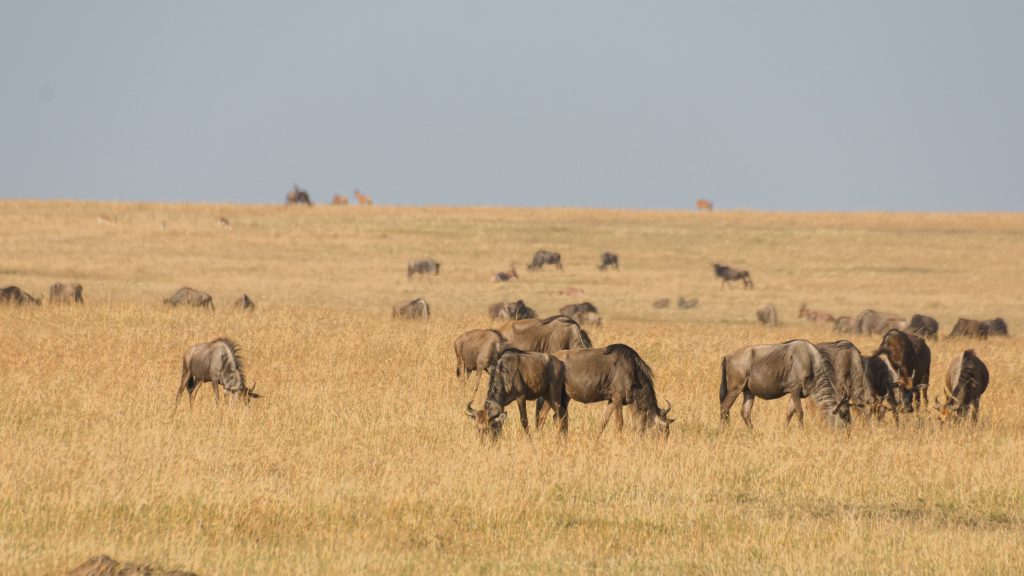
A herd of Wildebeest grazing in Serengeti, Tanzania.
What Exactly Is the Great Migration?
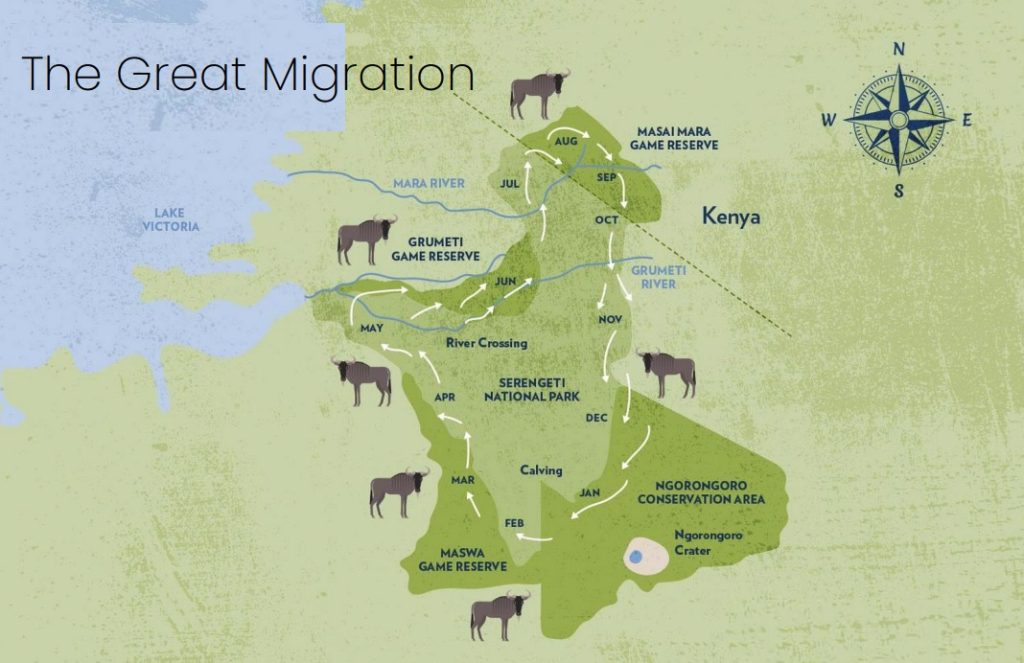
The Migration is a continuous, year-round movement of wildebeest driven by rainfall and the search for greener pastures. It covers roughly 1,800 miles annually and follows a clockwise route through Tanzania’s Serengeti, Maswa Game Reserve, Ngorongoro Conservation Area, and Kenya’s Masai Mara.
Key Facts: – Over 1.5 million wildebeest – Around 400,000 zebras – Thousands of eland and gazelles
Predators like lions, leopards, hyenas, wild dogs and crocodiles seize the opportunity to hunt, making the Migration a thrilling blend of beauty, danger, and survival.
When Does the Migration Happen? A Month-by-Month Breakdown
Jan–Mar: Calving season in Ngorongoro Conservation Area and southern Serengeti / Maswa Game Reserve – newborn calves attract predators.
Apr–May: Herds trek north through central Serengeti.
June: Grumeti River crossing in Western Serengeti.
Jul–Oct: Famous Mara River crossing in Kenya’s Masai Mara & Northern Serengeti.
Nov–Dec: Return south toward Serengeti as short rains start.
Where to See the Migration: Best Locations
Southern Serengeti, Maswa Game Reserve & Ngorongoro Conservation Area: Calving season & predator action.
Western Serengeti & Grumeti: Smaller river crossings.
Northern Serengeti & Masai Mara: Iconic Mara River crossings.
Masai Mara National Reserve: High wildlife density & easy access.
How to Experience the Migration: Your Options
Guided Safari Game Drives: 4×4 adventures with experienced guides.
Hot Air Balloon Safari: View thousands of animals from above at sunrise
Luxury Lodges & Camps: Stay near key river crossing points.
Combined Kenya + Tanzania Safari: Witness multiple migration stages
Best Time to See the Migration
The best months for most travelers are:
July–October: Mara River crossings.
January–March: Calving season in Ngorongoro, southern Serengeti, and Maswa.
Conclusion
The Great Wildebeest Migration is a natural masterpiece you must experience at least once in your lifetime. From the thundering hooves to predator action and dramatic river crossings, every moment is unforgettable.
At Kimbi Kimbi Safaris, we plan personalized safari experiences that place you right where the action is, ensuring you witness the Migration at its peak.
Imagine waking up to the soft golden light of the Kenyan savannah, the distant roar of a lion echoing across the plains, and the scent of morning dew on acacia trees. A day on safari in Kenya is not just about spotting wildlife; it’s an immersive journey that connects you to nature, culture, and adventure. At Kimbi Kimbi Safaris, we bring this dream to life—letting you experience the magic of the wild from sunrise to sunset.
Early Morning: The Awakening of the Wild
Safari days start early—long before the sun peeks over the horizon. Guests are gently woken with a hot cup of coffee or tea, ready for the excitement that awaits. As dawn breaks, the savannah comes alive: elephants amble towards watering holes, zebras graze quietly, and giraffes stretch their long necks toward the first rays of light. Morning game drives are perfect for photography. The soft lighting creates a golden glow over the landscape, enhancing the dramatic scenes of wildlife in motion. Keep an eye out for predators-lions and cheetahs are most active during the early hours, making sightings even more thrilling.
A closeup of a lioness licking her face after hunting her prey, Maasai Mara
Midday: Lodge Comforts and Cultural Encounters
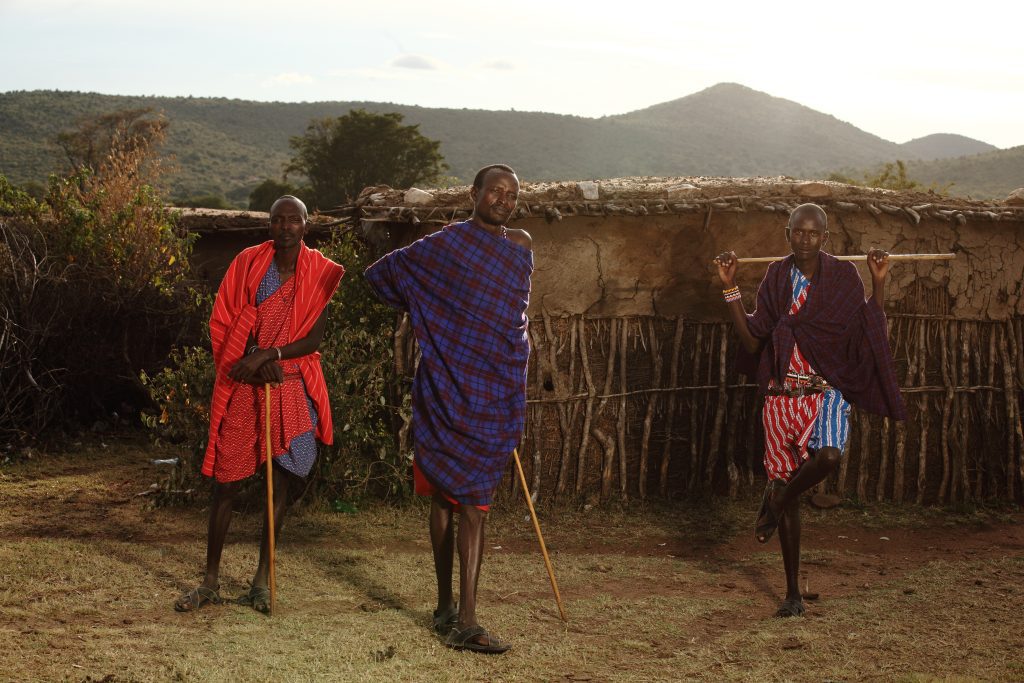
By late morning, you’ll return to your lodge for a hearty brunch or lunch. Most lodges blend luxury with authentic African charm, offering views of the wilderness right from your room. Some lodges provide shaded verandas, pools, or hammocks—perfect for a mid-day rest after an exhilarating morning drive. This is also a great time to engage with local Maasai or Samburu communities. Learn about traditional crafts, dances, and their deep connection to the land. A safari in Kenya is not only about wildlife—it’s about understanding the people who have lived in harmony with it for centuries.
The Maasai Community, Kenya
Afternoon: Game Drives and Nature’s Surprises
As temperatures cool, it’s time for another game drive. The afternoon offers a different perspective of the wildlife. Predators lounge in the shade, while elephants and buffalo move lazily across the plains. Birdwatchers will delight in the vibrant species that appear during the heat of the day. The guide’s expertise is invaluable. Their knowledge of animal behavior increases your chances of spotting elusive creatures and provides fascinating insights into Kenya’s ecosystems. From tracking footprints to explaining the survival strategies of the savannah, every moment is educational and thrilling.
A herd of elephants and deer on a field in the jungle ,Maasai Mara, Kenya
Sunset: The Golden Hour in the Bush
One of the highlights of any safari is the evening sundowner. As the sun dips toward the horizon, the savannah is bathed in rich oranges and reds. With a refreshing drink in hand, guests can relax and reflect on the day’s adventures. Wildlife doesn’t rest just because the sun sets. Nighttime drives offer a chance to witness nocturnal animals—leopards, hyenas, and owls emerge, and the bush comes alive with the sounds of the wild. Every rustle and call tells a story, making this a magical and unforgettable experience.
The End of a Day, The Start of Memories
A day on safari in Kenya is an unforgettable journey from sunrise to sunset. It’s a blend of excitement, discovery, and reflection, leaving travelers with lifelong memories and a deep connection to Africa’s wildlife and culture. At Kimbi Kimbi Safaris, we curate each itinerary to ensure you experience the best of Kenya—from the thrill of game drives to the comfort of luxury lodges and the warmth of local communities.
Ready to experience the ultimate Kenya Safari Experience? Book your safari today with Kimbi Kimbi Safaris and create memories that will last a lifetime.
If you’re dreaming of a once-in-a-lifetime best safari destination in Africa, three countries always stand out: Kenya, South Africa, and Botswana. Each offers incredible wildlife, breathtaking landscapes, and unforgettable experiences — yet they’re completely different in style, budget, and adventure level. If you are in for some thrilling wildlife moments look no further. These African countries is where your safari adventure begins!
In this comparison, we break down the wildlife experiences, pros, cons, costs, safety, and best seasons for each country so you can choose the safari destination that fits you perfectly.
1. Wildlife Experience
Kenya: The Classic, Big-Five Safari Capital
Kenya is home to some of the densest wildlife populations on the planet,making it a premier safari destination for travelers seeking unforgettable encounters with Africa’s iconic animals. With a vast network of national parks and reserves, each offering its own unique ecosystem and wildlife experience, Kenya provides something for every type of safari-goer. From the expansive savannahs of the Maasai Mara, where the Great Migration unfolds in dramatic waves of wildebeest and zebras, to the wildlife-rich landscapes of Amboseli with its majestic elephants against the backdrop of Mount Kilimanjaro, the diversity is unparalleled.
Kenya is ideal for first-time visitors, who can enjoy organized safaris with expert guides, for photographers, who will find endless opportunities for stunning shots of wildlife and landscapes, and for migration enthusiasts, who witness one of nature’s most spectacular spectacles. Simply put, Kenya offers a safari experience that combines density, diversity, and accessibility, ensuring every visitor leaves with memories to last a lifetime.
What makes Kenya unique:
The Great Wildebeest Migration in the Masai Mara National Reserve.
Huge elephant herds in Amboseli National Park.
Diverse ecosystems: savannah, lakes, forests, mountains
With absolutely no doubt, Kenya has the most reliable wildlife sightings of all the three countries.
South Africa: Great for Beginners & Families
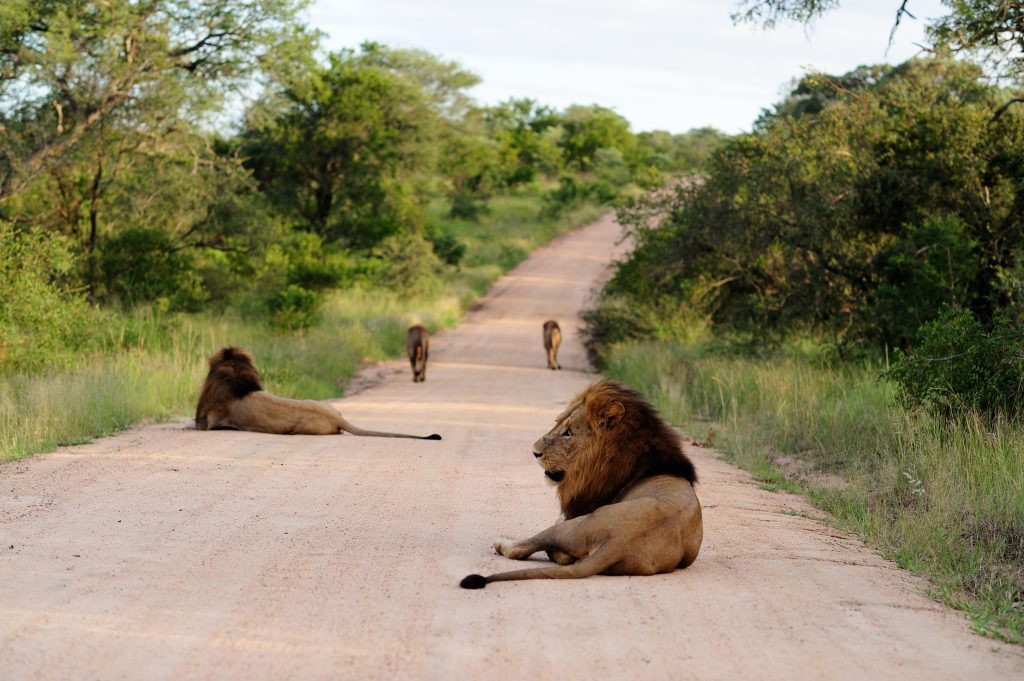
South Africa offers exceptional wildlife experiences, with world-renowned destinations such as Kruger National Park and exclusive private reserves like Sabi Sands providing abundant opportunities to see Africa’s iconic animals. While the wildlife density may not always match the dramatic herds of Kenya or the pristine wilderness of Botswana, South Africa compensates with well-developed infrastructure, easy accessibility, and a range of safari options.
A group of magnificent lions Kruger National Park
Its parks are well-marked and navigable, making them ideal for self-drive safaris, where visitors can explore at their own pace. South Africa is particularly well-suited for first-time safari-goers, offering the perfect balance between thrilling wildlife encounters and convenience, ensuring a memorable, stress-free safari adventure.
Botswana: Wild, Exclusive, and Expensive
Botswana is a sanctuary of untouched wilderness, where nature thrives largely undisturbed by human activity. Its landscapes, from the labyrinthine waterways of the Okavango Delta to the vast savannahs of Chobe National Park, are breathtaking in their pristine beauty. The Okavango Delta, a UNESCO World Heritage site, is a seasonal floodplain that transforms into a watery wonderland, attracting hundreds of species of birds, elephants, hippos, and predators, offering an unparalleled safari experience. Meanwhile, Chobe’s expansive plains are famed for their massive elephant herds, some of the largest in Africa, as well as lions, leopards, and buffalo roaming freely across the untouched terrain. In Botswana, the wilderness is raw, intimate, and unspoiled — a place where every safari feels like a journey into nature in its purest form, while you certainly have to pay for that right? However, the parks might be hard to access with seasonal water levels limiting the activities.
Botswana is best for luxury and exclusivity seekers.
2. Budget Comparison
Below is the honest breakdown (mid-range travel and luxury cost) for the three countries:
Country
Average Mid-Range Cost (per person/day)
Luxury Cost
Kenya
$250–$450
$600–$1,600
South Africa
$200–$350
$400–$1,200
Botswana
$600–$1,200
$1,500–$3,000
Winner: Kenya (best value + wide range of choices)
Botswana is one of the most expensive safari destination in Africa due to strict low-impact tourism policies. This approach emphasizes exclusive, premium safari experiences rather than mass tourism to protect ecosystems and minimize environmental impact.
3. Best Time to Visit
a)Kenya
Best: June–October, January–February (dry season) for easy wildlife spotting and migration in July–October.
Bonus:Kenya has good safari conditions year-round.
b) South Africa
Best: May–September (winter/dry season) Animals gather around waterholes for easier viewing.
Bonus:Cape Town & Garden Route are great year-round.
c) Botswana
Best: May–October (dry season) for excellent game viewing and peak Okavango Delta floods
Each country is incredible — but Kenya is the most balanced safari destination in Africa, blending wildlife, culture, landscapes, affordability, and world-class experiences.
If you want a safari that feels wild, authentic, and unforgettable, Kenya remains the heart of African adventure.
FAQ
1. Is Kenya better than South Africa for a safari?
Kenya offers higher wildlife density, the Great Migration, and more diverse landscapes, making it ideal for first-timers, families, and photographers.
2. Is Botswana worth the higher cost?
Yes — Botswana is unmatched for exclusivity and untouched wilderness, especially in the Okavango Delta. It’s best for luxury travelers.
3. Which safari country is best for beginners?
South Africa is the easiest for first-time safari travelers due to smooth infrastructure, fenced private reserves, and modern lodges.
4. Which country offers the best Big Five sightings?
Kenya has the most consistent Big Five sightings across multiple parks, especially Maasai Mara and Amboseli.
5. Can I combine a safari with the beach?
Kenya is the best country for a safari + beach holiday due to easy access to Diani, Watamu, Lamu, and Zanzibar
Your Ultimate Destination Guide Kimbi Kimbi Safaris!